
The success of a website project always starts with alignment. So when businesses partner with a marketing and web design agency, website success is heavily influenced by how clearly goals are defined, how well resources are managed, and how involved a business remains throughout the design & development process. As such, understanding your role, constraints, and responsibilities up front helps prevent delays, frustration, and missed opportunities.
Below are three foundational principles every business should follow when working with an agency to keep a website project on track and positioned for long-term success.
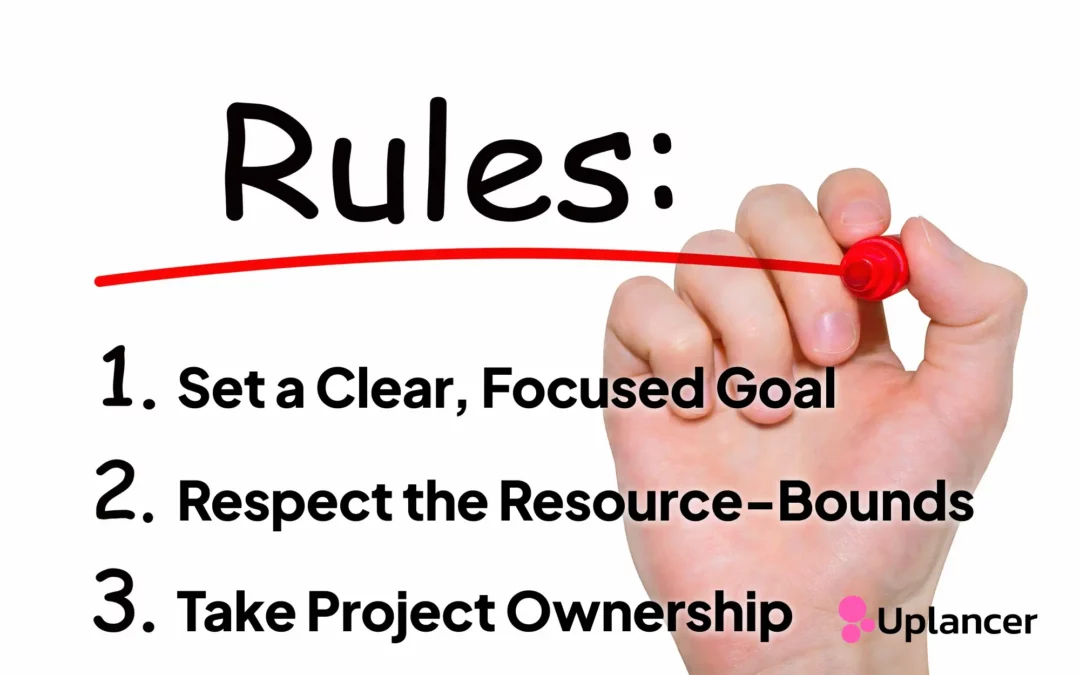
1. Always Stick to Your Website Goals
It’s incredibly easy to lose sight of your goals during the website development process. Before you start selecting design templates or debating color schemes, take the time to set your website goals:
- Are you trying to build brand awareness? Identify any upcoming deadlines and KPIs that signal success.
- Are you looking to generate leads immediately? Updates to your website might not be the answer; rather, paid media or SEO might be.
- Are you launching a new website? There’s more at play than just the UI, such as local business listings, analytics, search consoles, website performance, and more. Setting your website up correctly now means easier scaling later.
- Are you enhancing your current website? Determine the must-haves and nice-to-haves.
These common questions help shape your marketing agency’s approach. It’s also important to understand that your website goals will evolve. For us, evolution is common sense, and we use it in our CWR Methodology.
2. Everything is Resource-Bounded by Time and Budget
When you sign a contract with a web design agency, you agree on a scope of work, timeframe, and budget. If you start adding new features mid-project, this naturally impacts the timeline and workload. And while some agencies, like ours, will accommodate minor changes, doing so usually delays the final deliverable. In fact, that’s why 52% of projects meet their original timelines, with scope creep being a major contributor to the delays.
Another factor that impacts resources? Responsiveness. If your agency is waiting weeks for you for copy and imagery, or vice versa, your launch date will certainly suffer. Successful web design is a collaborative process; your agency can guide and support you, but it can’t move forward without your timely input. In addition, agencies are built for speed, so we find that the bottleneck is usually not on our end but on our clients’.
3. You’re the Boss, so Take Charge and Get Involved
One common mistake we see is when our clients completely hand over creative control to an agency and take a back seat. Contrary to this belief, it’s our job to be the experts in marketing and web design, and it’s your job to be the subject-matter expert in your business and to make decisions regarding our recommendations for design, branding, messaging, and strategy. This also includes selecting a hosting platform, outlining your sitemap, and confirming functionality. Yes, we’ll offer our expert opinions and recommendations, but ultimately, this is your website, and you need to ensure it accurately reflects your brand.
The Bottom Line
Ultimately, a website is a shared responsibility between you and your agency. Clear goals, realistic expectations, and your active involvement will keep your website project on track and on brand. And when you stay engaged and aligned throughout the whole process, your agency will do what it does even better: execute efficiently and strategically. Follow these principles and your website will not only launch on time, but also be built to evolve, scale, and deliver real business value.
Looking for the best marketing agency to help with your website project? Let’s talk!